

Key Takeaways
- Defatted peanut powder is made by pressing the oil out of roasted peanuts and milling the cake — high protein, low fat.
- It is used across sports nutrition, bakery, beverages, sauces and snacks, and can be rehydrated into a low-fat spread.
- “Peanut butter powder” is basically a defatted powder, sometimes lightly sweetened and salted.
- Being a dry powder, it is shelf-stable, easy to dose and simple for food brands to formulate with.
- As a peanut powder manufacturer, we at Insight Food Private Limited supply bulk and private-label powders from a certified facility.
High in protein, low in fat and remarkably versatile, defatted peanut powder has become a go-to ingredient for food formulators and health-conscious brands. This guide covers the most common defatted peanut powder uses, its nutritional benefits, how it’s manufactured, and how it differs from peanut butter powder.
What is defatted peanut powder?
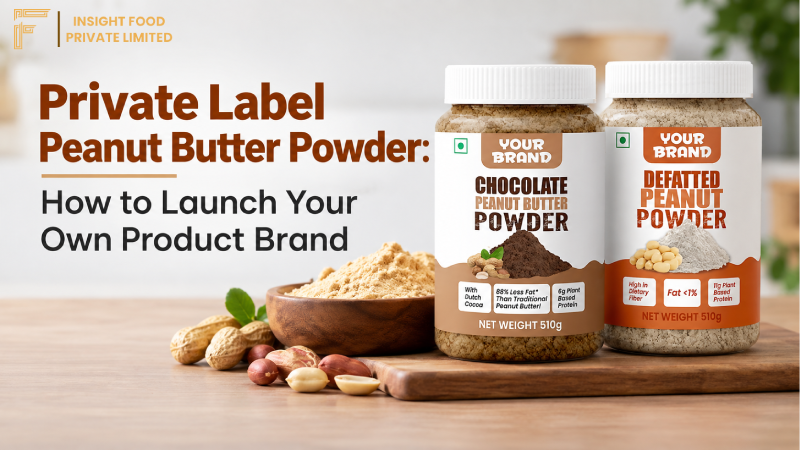
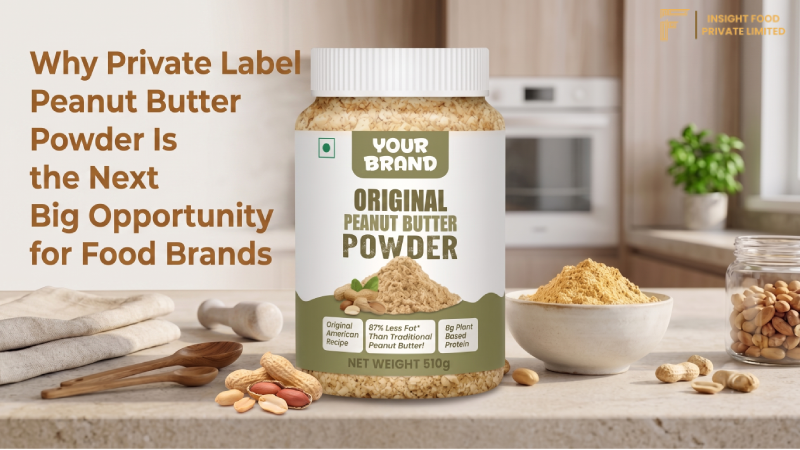
Defatted peanut powder is made by pressing roasted peanuts to remove most of the natural oil, then milling the remaining peanut cake into a fine powder. Removing the oil concentrates the protein and dramatically lowers the fat and calorie content — while keeping that roasted peanut flavour. “Peanut butter powder” is closely related: it’s typically a defatted peanut powder, sometimes lightly sweetened and salted to taste like peanut butter when rehydrated.
How defatted peanut powder is made
- Roasting — peanuts are roasted to develop flavour.
- Pressing — mechanical pressing removes a large share of the natural oil, leaving a low-fat peanut cake.
- Milling — the cake is ground into a fine, free-flowing powder.
- Sieving & QA — the powder is sieved to a uniform particle size and tested for moisture, protein, micro and aflatoxin.
Key benefits of defatted peanut powder
- High protein — concentrated plant protein, ideal for sports-nutrition and high-protein products.
- Low fat & lower calorie — most of the oil is removed compared with whole peanuts or peanut butter.
- Shelf-stable & convenient — a dry powder is easy to store, transport and dose, with a long shelf life.
- Clean peanut flavour — adds taste without the oiliness of paste.
- Easy to formulate — disperses into wet and dry systems, supporting consistent production.
Defatted peanut powder uses
| Application | How it’s used |
|---|---|
| Sports & clinical nutrition | Protein shakes, bars, meal-replacement blends |
| Bakery & confectionery | Breads, cookies, energy balls, fillings — peanut flavour & protein boost |
| Beverages | Peanut smoothies, lattes, plant-based drinks |
| Sauces & savoury | Satay, dressings, soups, ready meals |
| Cereals & snacks | Granola, muesli, coatings, seasonings |
| Reconstituted spread | Mix with water to make a low-fat peanut-butter-style spread |
Defatted peanut powder vs peanut butter powder vs peanut butter
| Attribute | Defatted peanut powder | Peanut butter powder | Peanut butter |
|---|---|---|---|
| Form | Dry powder | Dry powder (often sweetened/salted) | Paste |
| Fat | Lowest | Low | High (natural oils) |
| Protein density | Highest | High | Moderate |
| Best for | Formulation & nutrition | Shakes, baking, spreads | Spreading, cooking |
Insight Food manufactures defatted peanut powder and peanut butter powder in a BRCGS & USDA-Organic certified facility — in bulk and private-label formats for food brands, formulators and exporters.
👉 Browse our peanut powders | Request a sample or bulk quote
Frequently asked questions
u003cstrongu003eWhat is defatted peanut powder used for?u003c/strongu003e
It’s used in sports nutrition (shakes, bars), bakery and confectionery, beverages, sauces, cereals and snacks, and to make a low-fat reconstituted peanut spread — adding peanut flavour and plant protein with very little fat.
u003cstrongu003eIs defatted peanut powder healthy?u003c/strongu003e
It’s a concentrated source of plant protein with much less fat and fewer calories than whole peanuts or peanut butter, making it popular in high-protein and weight-management products. Individual nutrition depends on the specific product spec.
u003cstrongu003eWhat is the difference between defatted peanut powder and peanut butter powder?u003c/strongu003e
They’re closely related — both are made by pressing oil from roasted peanuts and milling the cake. “Peanut butter powder” is usually a defatted powder that may be lightly sweetened and salted so it tastes like peanut butter when mixed with water.
u003cstrongu003eHow is defatted peanut powder made?u003c/strongu003e
Roasted peanuts are mechanically pressed to remove most of the oil, and the remaining peanut cake is milled into a fine powder, then sieved and quality-tested.
u003cstrongu003eCan defatted peanut powder be used to make peanut butter?u003c/strongu003e
Yes — mixing the powder with water (and oil if desired) produces a lower-fat, peanut-butter-style spread, which is why it’s popular with health-focused consumers.