

Key Takeaways
- USDA Organic peanut butter means certified organic groundnuts, grown without prohibited synthetic inputs and processed in a certified, segregated facility.
- Organic vs conventional differ in the supply chain and positioning, not necessarily nutrition — organic carries a premium, clean-label appeal.
- White-label manufacturing lets you launch an organic peanut butter under your own brand without running a facility.
- Confirm your manufacturer’s USDA Organic certification, organic sourcing traceability and compliant labelling before you start.
- As a BRCGS & USDA-Organic certified maker, we at Insight Food Private Limited produce organic and conventional nut butters under private & white label.
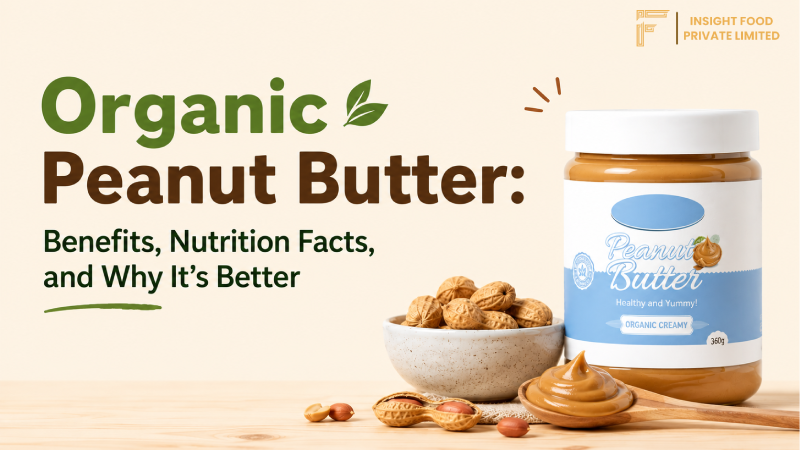
Organic and clean-label foods are one of the fastest-growing segments in retail — and USDA Organic peanut butter sits right at the centre of it. If you want to launch an organic peanut butter under your own brand, this guide explains what the certification means, how organic differs from conventional, and how white-label manufacturing lets you go to market quickly.
What makes peanut butter “USDA Organic”?
USDA Organic is a certification governed by the United States Department of Agriculture’s National Organic Program (NOP). For peanut butter to carry the seal, the groundnuts must be grown without prohibited synthetic pesticides or fertilisers, and the product must be processed in a certified facility that keeps organic ingredients segregated from conventional ones, with full traceability and an audited chain of custody. Any added ingredients (salt, sweetener) must also comply with organic rules.
Organic vs conventional peanut butter
| Attribute | USDA Organic | Conventional |
|---|---|---|
| Farming | No prohibited synthetic pesticides/fertilisers | Conventional inputs permitted |
| Processing | Certified facility, segregated & traceable | Standard food-safety controls |
| Labelling | May display the USDA Organic seal | No organic claim |
| Positioning | Premium, clean-label shoppers | Mainstream value |
Both can be equally safe and high quality — the difference is the certified organic supply chain and the premium positioning it supports.
Launching a white-label organic peanut butter
White-label (and private-label) manufacturing lets you sell a ready or customised organic peanut butter under your own brand without operating a facility. The manufacturer supplies the certified product; you supply the brand, packaging and go-to-market.
What to confirm with your manufacturer
- Valid USDA Organic certification covering the specific product and line.
- Certified organic groundnut sourcing with documented traceability.
- Segregation controls so organic batches aren’t cross-contaminated with conventional stock.
- Additional certifications your market needs — BRCGS, HACCP, Halal, Kosher.
- Compliant labelling for your destination market’s organic rules.
White-label food business: the basics
- Pick your niche & positioning — organic, high-protein, clean-label, etc.
- Choose a certified manufacturer and approve samples.
- Design brand & compliant packaging (ingredients, nutrition, allergens, organic seal where licensed).
- Plan MOQ, pricing & logistics — including export documentation if shipping abroad.
- Launch & scale — re-order and expand the range as demand grows.
Insight Food is a BRCGS & USDA-Organic certified manufacturer of peanut butter and nut butters in India — producing organic and conventional products under private & white label for brands worldwide.
👉 View our certifications | Start a white-label project
Frequently asked questions
u003cstrongu003eWhat makes peanut butter USDA Organic?u003c/strongu003e
The groundnuts must be grown without prohibited synthetic pesticides or fertilisers and processed in a USDA-certified facility that segregates organic from conventional stock with full traceability. Added ingredients must also be organic-compliant.
u003cstrongu003eIs organic peanut butter healthier than conventional?u003c/strongu003e
Both can be safe and nutritious. The organic difference is the certified farming and processing chain and the premium, clean-label positioning it supports — not a guaranteed nutritional difference.
u003cstrongu003eCan I launch my own organic peanut butter brand?u003c/strongu003e
Yes. A white-label or private-label manufacturer with valid USDA Organic certification can produce the product under your brand, so you handle marketing and sales without running a factory.
u003cstrongu003eWhat is the difference between white label and private label?u003c/strongu003e
White label is a ready product re-branded by multiple sellers; private label is customised to your brand’s recipe, packaging and specification.
u003cstrongu003eWhat certifications should an organic peanut butter manufacturer have?u003c/strongu003e
USDA Organic for the organic claim, plus food-safety certifications like BRCGS and HACCP, and Halal or Kosher where your target market requires them.